Thursday, 21 March 2013
mile zip line
http://www.dailymail.co.uk/news/article-2297010/Zoom-view-Welcome-northern-hemispheres-longest-zip-wire-whizz-MILE-LONG-route-Welsh-mountains-100mph.html

Butterfly farm


The Magic of Life Butterfly House, Aberystwyth, Wales
www.magicoflife.org/
Snowing
Sharing on the feeder


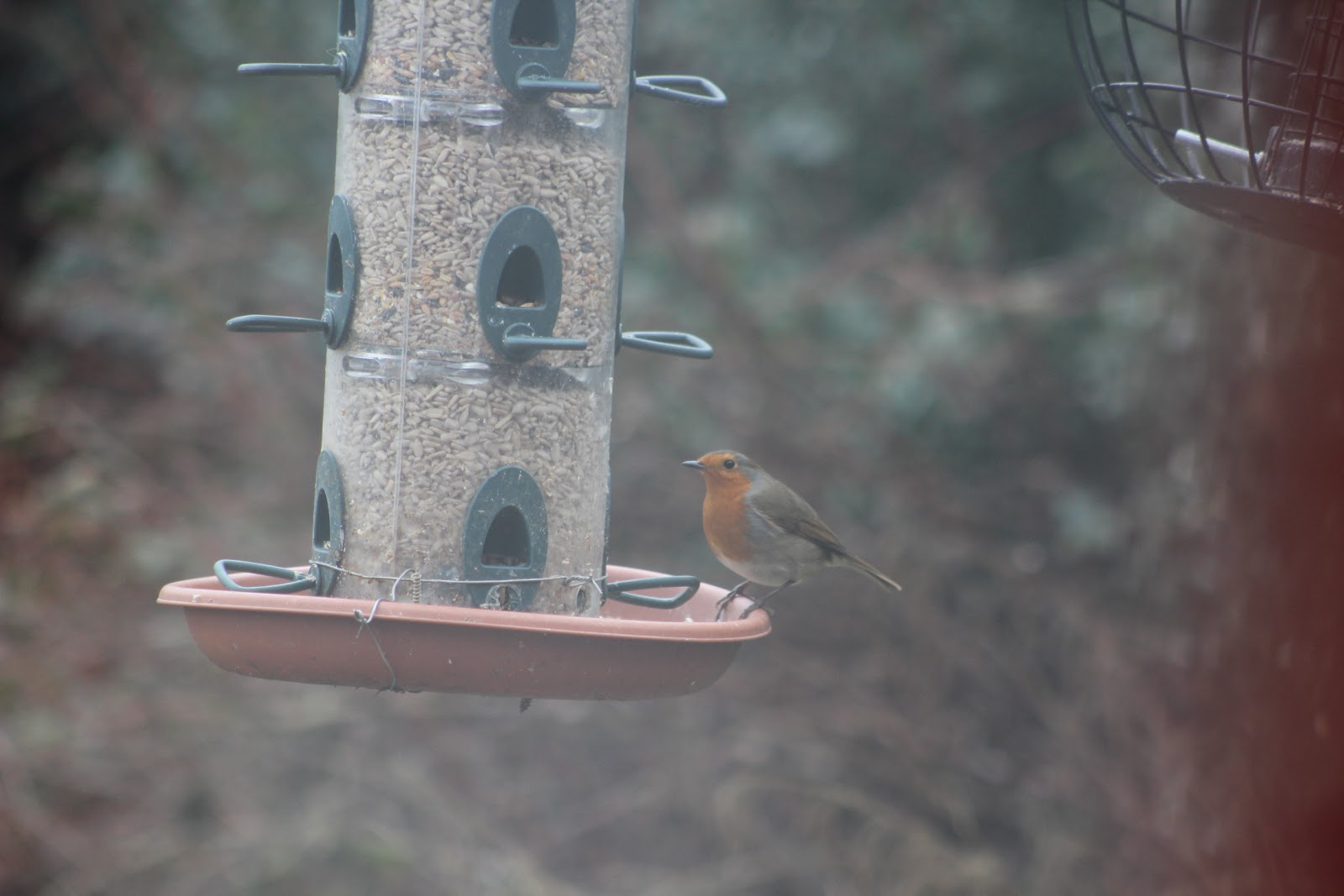
The only bird who does not share is the Robin.


Monday, 18 March 2013
Goldfinch
A highly coloured finch with a bright red face and yellow wing patch. Sociable, often breeding in loose colonies, they have a delightful liquid twittering song and call. Their long fine beaks allow them to extract otherwise inaccessible seeds from thistles and teasels. Increasingly they are visiting birdtables and feeders. In winter many UK goldfinches migrate as far south as Spain.
Overview
Latin name
Carduelis carduelis
Family
Finches (Fringillidae)
Where to see them
Anywhere there are scattered bushes and trees, rough ground with thistles and other seeding plants. Likes orchards, parks, gardens, heathland and commons. Less common in upland areas and most numerous in southern England.
When to see them
All year round.and sometimes in my garden restaurant today was the first `i saw them this this year lucky me maybe the female will visit tomorrow.
Seeds and insects in summer.
Population
| Europe | UK breeding* | UK wintering* | UK passage* |
|---|---|---|---|
| - | 313,000 territories | 100,000 birds | - |
* UK breeding is the number of pairs breeding annually. UK wintering is the number of individuals present from October to March. UK passage is the number of individuals passing through on migration in spring and/or autumn.


Sunday, 17 March 2013
Mating Collared doves
Collared doves are a pale, pinky-brown grey colour, with a distinctive black neck collar (as the name suggests). They have deep red eyes and reddish feet. Their monotonous cooing will be a familiar sound to many of you. Although you'll often see them on their own or in pairs, flocks may form where there is a lot of food available.
Overview
Latin name
Streptopelia decaocto
Family
Pigeons and doves (Columbidae)
Where to see them
Just about anywhere, but often around towns and villages. They're common visitors to gardens. But collared doves only came to the UK in the 1950s, after a rapid spread across Europe from the Middle East.
When to see them
Any time of year.
What they eat
Seeds and grain.
Population
| Europe | UK breeding* | UK wintering* | UK passage* |
|---|---|---|---|
| - | 298,000 territories | - | - |


* UK breeding is the number of pairs breeding annually. UK wintering is the number of individuals present from October to March. UK passage is the number of individuals passing through on migration in spring and/or autumn.
 Dolfor hills to the front of our house all clear of snow


Snow on the hills


Wednesday, 13 March 2013
short life


Subscribe to:
Posts (Atom)